
Selling a business is an exercise in someone else’s skepticism. However an owner sees the enterprise, a serious buyer sees a set of risks to be discounted, and the gap between those two views is where valuation is won or lost. In the current succession-driven market, where a historic wave of acquisitions is reshaping who owns what, that scrutiny has only intensified.
How do you pressure-test owner dependence?
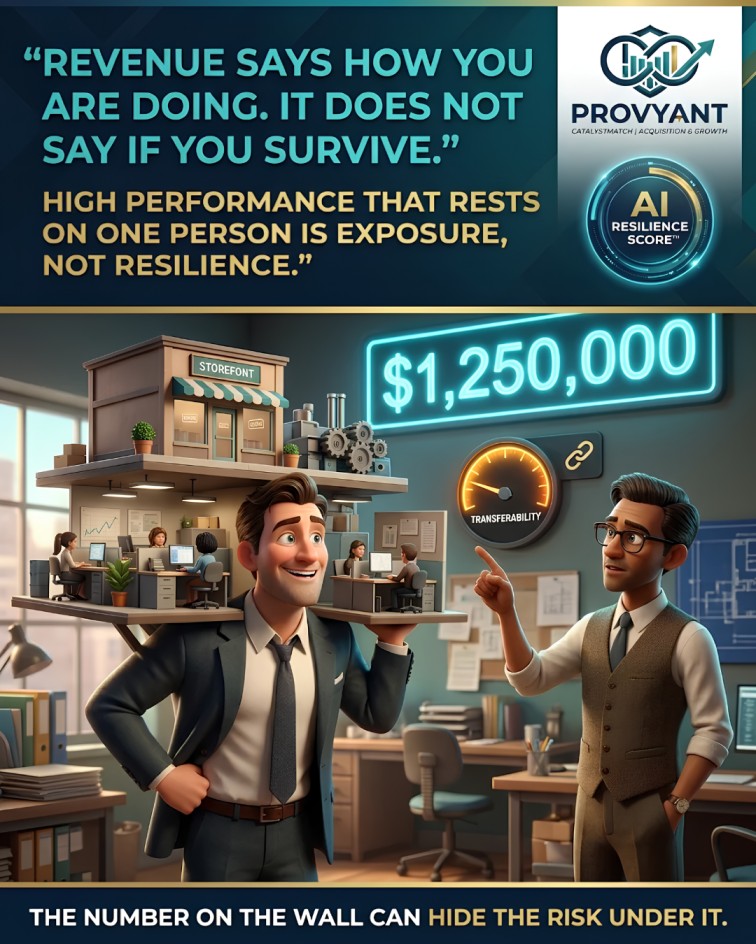
You pressure-test owner dependence by measuring what breaks when you step away. The first test a buyer runs, often silently, is how much of the business is simply the owner. If the relationships, the pricing, and the institutional memory all live in one person, the buyer is not purchasing a company so much as a demanding job with risk attached.
Run this test on yourself before they do. Map what would stall if you were unreachable for ninety days. The answers point directly at the work that protects your valuation, and they mirror what the AI Resilience Score measures as founder dependence. What you fix now is what you no longer have to discount later.
What do buyers look for in your operations?
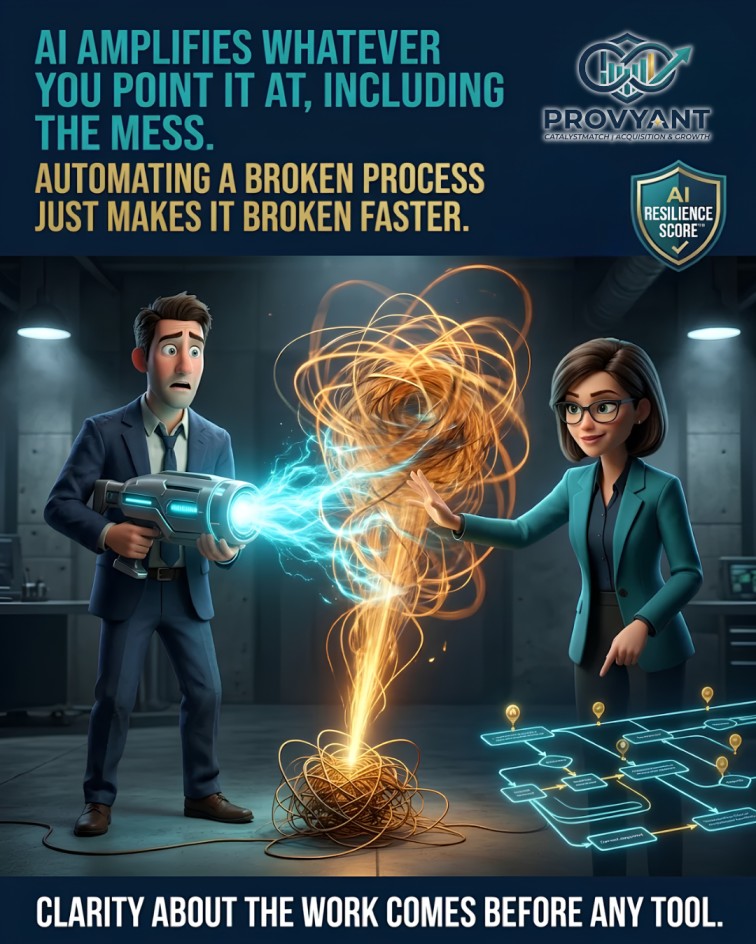
Buyers look for systems rather than heroics. Documented processes, predictable workflows, and custom software the business actually controls all signal an enterprise that can run under new ownership. Undocumented instinct signals the opposite, however impressive the results have been.
This is also where AI readiness and saleability converge. A business with mapped, stable operations can adopt AI safely, and that same stability is what makes it financeable and transferable. The work that makes you modern and the work that makes you sellable turn out to be the same work.
Why is AI exposure becoming part of due diligence?
AI exposure is becoming part of due diligence because buyers now understand it as a risk that can surface after closing. They increasingly ask where the business depends on AI, whether that dependence has a fallback, and whether the workforce is prepared for continued change.
With AI investment accelerating across every sector, an unexamined AI posture is shifting from a neutral to a valuation drag. Owners who can document their AI dependencies and their continuity plans walk into due diligence with an answer rather than a liability.
How do you test the financials for hidden fragility?
You test financials for fragility by looking past the totals to the concentration behind them. Clean books matter, but buyers also probe for single points of failure. One dominant customer, one key supplier, or one irreplaceable employee all read as fragility regardless of how healthy the revenue looks.
The Future of Jobs Report sharpens the talent version of this risk, since roles are shifting fast enough that reliance on one hard-to-replace skill set carries more exposure than the financials suggest. Diversifying these concentrations before a sale removes a discount a buyer would otherwise apply.
Frequently Asked Questions
What is the first thing buyers check in due diligence?
Beyond the financials, serious buyers check owner dependence first. They want to know whether the business can operate and retain customers without the current owner. A business that passes this test moves quickly through diligence, while one that fails it often sees the offer shrink or the deal collapse.
How long before selling should I start pressure-testing?
Ideally twelve to twenty-four months, though any lead time helps. The weaknesses a pressure test reveals, such as undocumented processes or customer concentration, take time to fix. Starting early lets you address them calmly and capture the higher valuation, rather than conceding discounts under the pressure of an active deal.
Does AI readiness really affect what a business sells for?
Increasingly, yes. Buyers now treat unmanaged AI dependence as a post-closing risk and price it accordingly. A business that can show documented AI use, clear fallbacks, and a prepared workforce reduces perceived risk, which supports a stronger valuation and a smoother diligence process.
Sell From Strength With Provyant
A pressure test is only useful if it leads to repair, and Provyant helps owners turn findings into value. Each weakness you locate and fix before listing is a discount you refuse to hand over at the table. Begin with an honest diagnosis through the AI Resilience Score, then let Provyant help you strengthen the exposures while the business is still yours to improve. Sell the company that passes the test, not the one that hopes to.