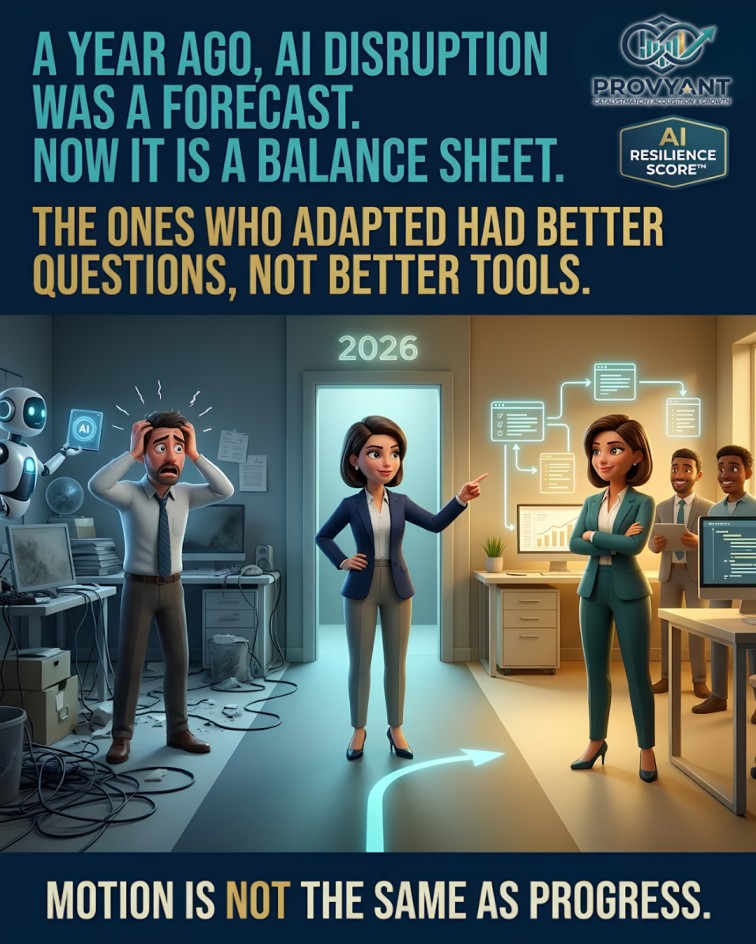
Twelve months ago, most of the conversation about artificial intelligence was still speculative. The question was whether the disruption would arrive. That question is now settled, and the businesses that spent the year watching learned a very different lesson from the ones that spent it adapting. When enterprise AI initiatives were studied this year, the finding was blunt. Most failed, and they failed for reasons that had little to do with the technology itself.
Why did the tool turn out to be the easy part?
The tool was never the hard part because adoption is a trust and process problem long before it is a software problem. Owners who led with procurement bought platforms, ran pilots, and waited for transformation. What arrived instead was complexity they had not planned to manage.
The businesses that gained ground treated AI as an operational question first. They asked what work needed to change, who owned that change, and how the organization would absorb it. Research this year found that only a small fraction of companies fully trust AI to run core processes, which tells you adoption is a governance challenge, not a shopping trip. The platform was ready long before the organization was.
Why did speed without direction get so expensive?
Speed without direction was expensive because motion felt like progress while solving nothing. The pressure to move fast produced a great deal of activity and very little advantage, as capital flowed into tools that answered no defined problem.
The disciplined operators moved slower on purchase and faster on clarity. They mapped exposure before they spent, which is the same logic behind measuring an AI Resilience Score before committing budget. Direction turned out to be far cheaper than correction. Every dollar spent without a clear problem became a dollar spent twice, once on the tool and again on undoing it.
What did the workforce teach leaders this year?
The workforce taught leaders that silence has a cost. Leadership often framed AI as a productivity story while employees experienced it as a question about their future, and that gap quietly drained trust and talent.
The Future of Jobs analysis made the churn visible by naming which roles grow and which shrink. Businesses that communicated honestly about this held their people. The ones that went quiet watched their best employees start planning exits, because uncertainty left unaddressed always fills itself with worst-case assumptions.
Why did dependence become the year’s quietest risk?
Dependence became the quietest risk because it formed without anyone deciding it should. Workflows that ran through external models turned load-bearing by accident, and continuity stopped being theoretical the first time a model changed or an outage landed.
This is why resilience and custom software a business actually controls moved from nice-to-have to strategic. The more of the critical path that runs through AI, the more it matters who owns that path. Owners who mapped their dependencies early treated them as managed risks. Owners who did not inherited them as emergencies.
Frequently Asked Questions
What was the biggest AI mistake businesses made in 2026?
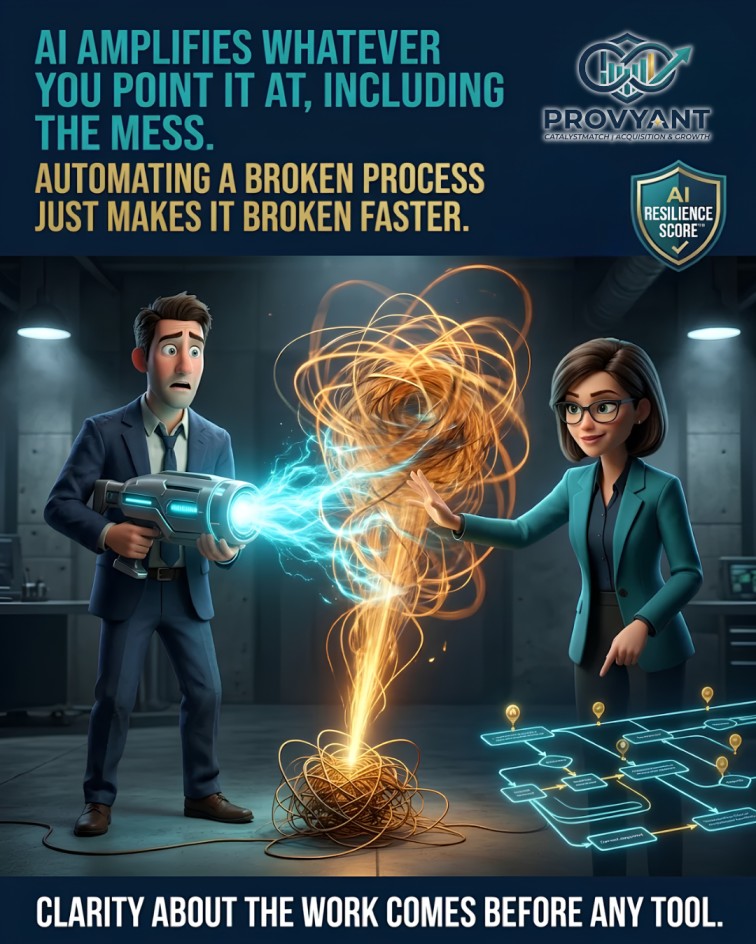
The most common mistake was buying tools before mapping processes. Automating an undocumented or broken workflow simply produced a faster version of the same problem. The businesses that succeeded invested first in understanding their operations, then applied AI to processes that were already clear, stable, and worth accelerating.
Did AI actually reduce headcount in most businesses this year?
In many cases the bigger effect was on task composition rather than outright headcount. Roles shifted as routine cognitive work was automated and human judgment became more valuable. The businesses that managed this well redeployed people toward higher-value work instead of treating every efficiency as a reason to cut.
How do I know if my business adapted or just added tools?
Ask whether your operations changed or only your software bill. Genuine adaptation shows up as documented processes, reduced single points of failure, and a workforce that trusts the technology. If you added tools but your workflows and dependencies look the same, you adopted software without building resilience.
Turn a Hard Year Into Provyant’s Head Start
The value of a difficult year is the clarity it leaves behind, and Provyant exists to turn that clarity into advantage. The businesses that will lead in 2027 are the ones applying these lessons now, starting with an honest read of where they stand through the AI Resilience Score and a plan built on it through Provyant’s ongoing intelligence. The lesson of the year is already written. The only question is who acts on it first.