Adoption mistakes are rarely obvious in the moment. They feel like progress. A tool gets deployed, a task gets faster, and the decision looks sound until the consequences compound quietly over the following year. By the time they surface, they are expensive to unwind. With most AI initiatives failing to reach production value, the gap between activity and results is where next year’s problems are being created right now.
Why does buying tools before mapping processes backfire?
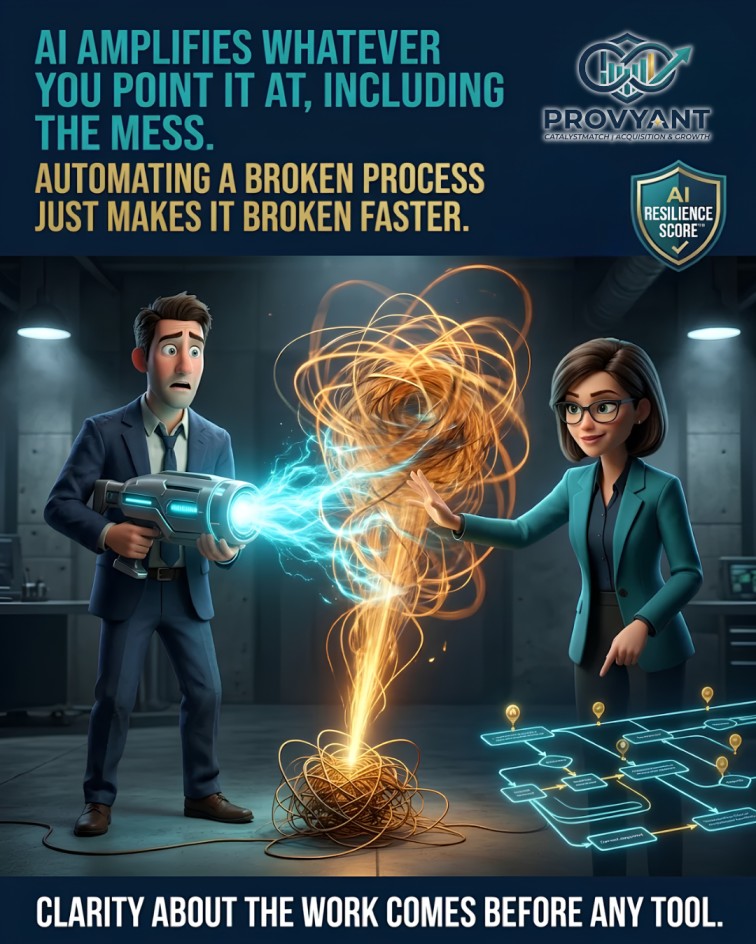
Buying tools before mapping processes backfires because AI amplifies whatever it is pointed at, including the mess. Automating a process nobody has documented simply produces a faster version of a broken process, now harder to see because it moves quickly.
The businesses that avoid this invest first in understanding their operations. Pairing that understanding with workflow automation built on documented processes turns AI into leverage rather than noise. The sequence matters more than the spend, because clarity about the work is what makes any tool worth buying in the first place.
What makes AI dependence without a fallback so dangerous?
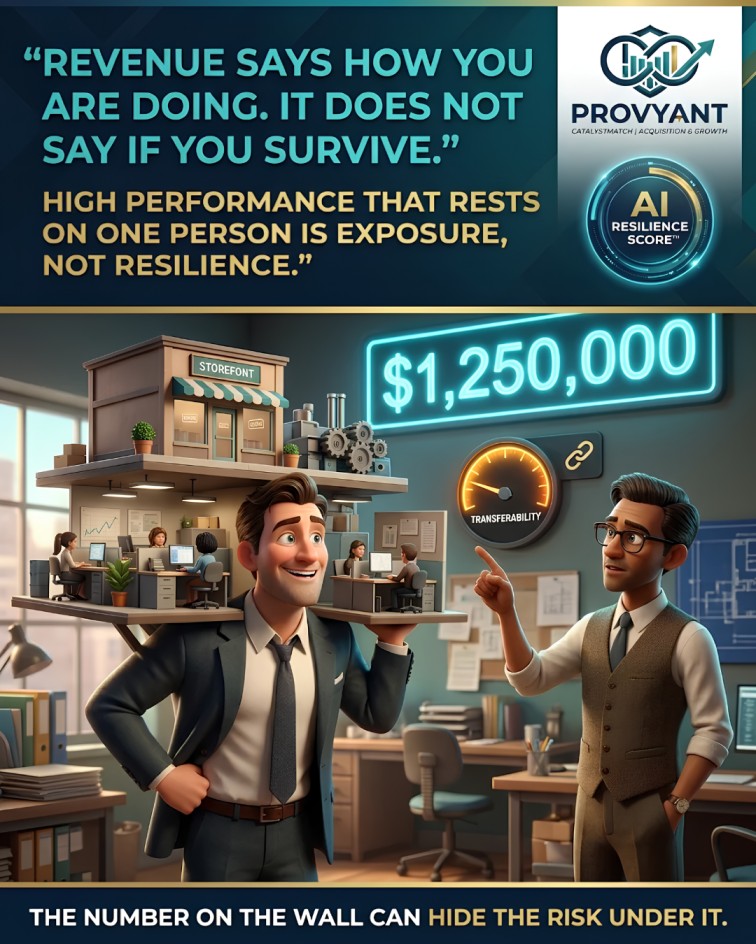
Dependence without a fallback is dangerous because it converts a convenience into a single point of failure. A critical function running entirely through an external model works beautifully until the vendor changes terms, the model behaviour shifts, or an outage lands during the worst possible week.
Continuity planning is not pessimism. It is the recognition that AI investment at scale is reshaping infrastructure faster than most businesses can absorb. Dependence formed casually becomes risk inherited permanently, and the time to design a fallback is before you need it, not during the failure.
Why do leaders keep underestimating the people side?
Leaders underestimate the people side because they treat AI as a technical rollout and are surprised when it stalls. The resistance is not irrational. Employees reading about workforce churn in reports like the Future of Jobs analysis are calculating their own exposure, and silence from leadership reads as a threat rather than neutrality.
Adoption that ignores this produces quiet non-compliance, workarounds, and attrition. The tool gets purchased and never genuinely used, which is the most expensive outcome of all, because it carries the full cost with none of the benefit.
How do businesses confuse activity with readiness?
Businesses confuse activity with readiness by mistaking motion for preparedness. Running pilots and attending demos feels like progress, but readiness is a measurable state, not a mood. A calendar full of AI meetings can coexist with an organization that is no more resilient than it was a year ago.
Checking your AI Resilience Score replaces the comfortable assumption of readiness with an honest picture of it. The difference shows up the moment something goes wrong, when assumed readiness collapses and measured readiness holds.
Frequently Asked Questions
What is the most common AI adoption mistake?
The most common mistake is deploying tools onto undocumented processes. Without a clear map of how the work actually flows, AI accelerates inefficiency instead of removing it. The fix is to document and simplify the process first, then apply automation only where it genuinely adds speed or reliability.
How do I avoid becoming dependent on a single AI vendor?
Build fallbacks into any workflow that would halt the business if a tool failed. That can mean a secondary provider, a manual backup procedure, or owning more of the critical path through controlled software. The goal is not to avoid vendors but to ensure no single one can take you offline.
Should small businesses slow down their AI adoption?
Not slow down, but sequence better. The problem is rarely moving too fast overall. It is moving fast without direction. Small businesses benefit from diagnosing their exposure, prioritizing the highest-value fixes, and adopting deliberately, which is usually faster to real results than scattered, reactive buying.
Fix It Before It Compounds, With Provyant
Every one of these mistakes is avoidable, and every one is cheaper to prevent than to repair. Provyant helps owners catch them while there is still time to adjust course. Start with a clear-eyed look at where you stand through the AI Resilience Score, and let Provyant turn next year’s potential regrets into this year’s corrections. The mistake you catch early is the one that never makes the story.