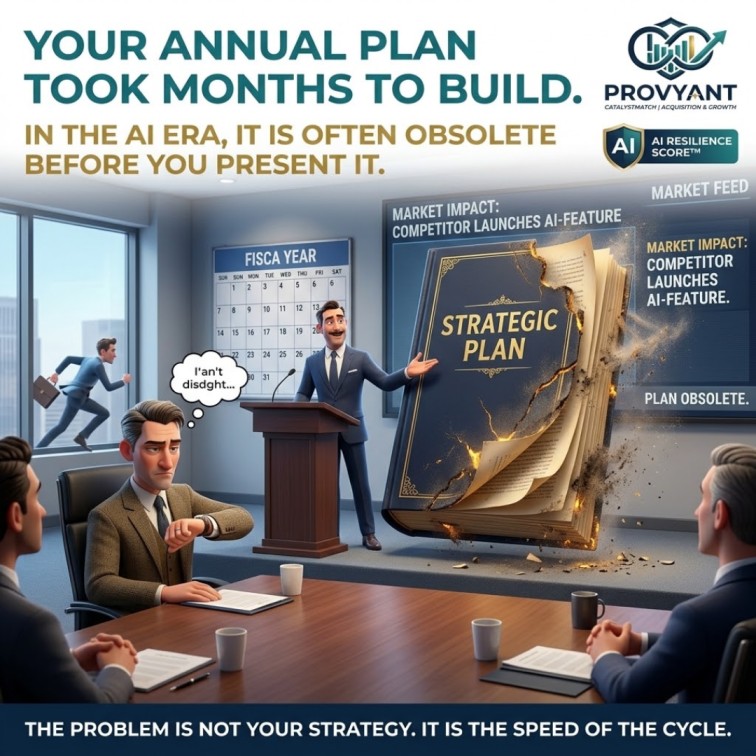
Every major economic transition produces a cohort of leaders who act early, build deliberately, and come out the other side with structural advantages that their peers spend years trying to close. The industrial revolution had them. The digital transformation had them. The AI transition is producing them right now, and the window in which early, deliberate action still confers a durable advantage is narrowing.
The decisions that will define the next decade of business are not being made in some future planning cycle. They are being made in boardrooms, acquisition conversations, and workforce strategy sessions happening right now. As Provyant has outlined in its analysis of the Invisible Recession already reshaping the economic landscape, the organisations and individuals that recognise this moment for what it is are the ones building positions that will be very difficult to replicate in three years.
The Window That Is Already Closing
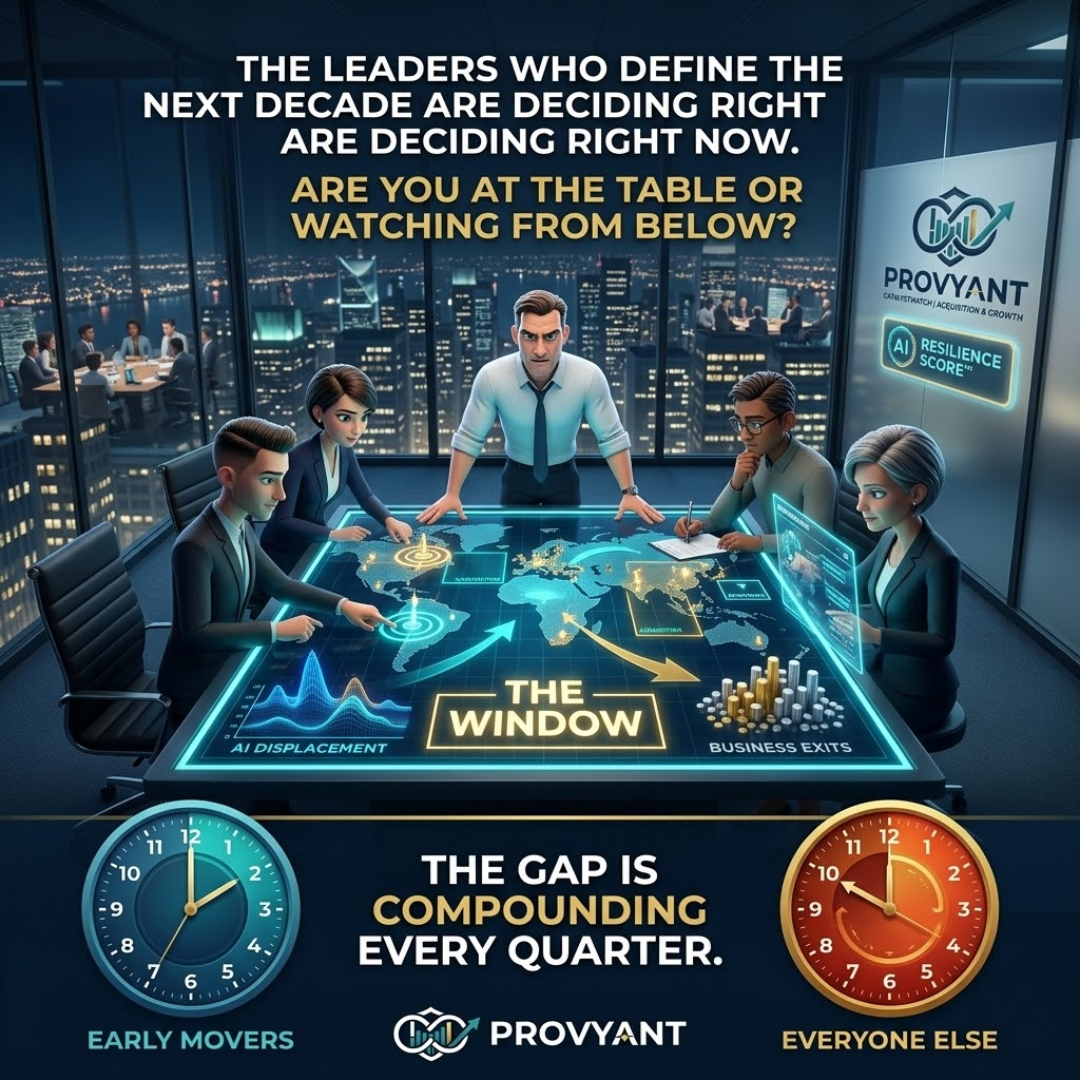
The competitive advantage of early, deliberate action in an AI transition is not permanent. It exists because most organisations are still in a phase of experimentation, pilot programmes, and strategic planning. The gap between those who have moved and those who are still planning is widest right now. That gap compounds.
75% of CEOs are now their organisation’s primary decision-maker on AI strategy, and companies expect to double AI spending in 2026, from an average of 0.8% of revenue to approximately 1.7%, according to BCG. Investment is accelerating. But investment alone does not create the kind of structural positioning that separates the leaders who define the next decade from the ones who follow it.
Only 39% of companies report any profit from AI, according to McKinsey’s latest global AI survey. Future-built companies allocate an average of 64% more of their IT budgets to AI efforts than their peers. The differentiation is not in intent. It is in the quality and specificity of the decisions being made. The leaders defining the next decade are not simply spending more on AI. They are making fundamentally different decisions about where they are building, what they are acquiring, and how they are governing.
What the Defining Leaders Are Actually Doing
In 2026, the most successful organisations will stop treating AI as a technology race and start treating it as a management revolution. The winners will not be those deploying the most models, but those reinventing how decisions, teams, and accountability are organised around AI. That distinction, between leaders managing a technology initiative and leaders redesigning how their organisation operates, is what separates the ones building durable positions from the ones generating impressive pilot results that never scale.
PwC’s 2026 analysis is direct about what this looks like in practice. Senior leadership picks a few key workflows or business processes where AI can deliver genuine transformation, applies the right combination of talent, technical resources, and change management, and builds a centralised capability that links business goals to AI execution. Real results require precision in picking a few spots where AI can deliver meaningful change, then executing with sustained discipline. The organisations taking that approach are producing measurable returns. The ones treating AI as a broad transformation initiative without that specificity are producing costs.
The WEF’s analysis of organisational transformation in 2026 identifies five focus areas where the most effective leaders are concentrating effort: real-time customer experience, efficient and resilient operations, accelerated innovation, predictive strategic planning, and data-driven talent development. What unites these five areas is not technology. It is the quality of the leadership decisions directing technology toward outcomes that matter.
The Leadership Qualities That Actually Define the Decade
The WEF’s Future of Jobs Report 2025 shows leadership, emotional intelligence, and adaptability ranking among the top ten skills that will define the next decade. LinkedIn’s 2026 Skills on the Rise report confirms that executive communication, cross-functional collaboration, and AI business strategy are surging in demand.
The leaders defining the next decade are not the ones who understand AI most deeply from a technical perspective. They are the ones who can exercise strategic judgment about where AI creates genuine value, lead cultural transformation rather than just digital change, and maintain accountability for decisions that AI systems inform but humans must own.
DDI’s Global Leadership Forecast 2025 found that 71% of leaders are experiencing heightened stress, and 40% are weighing whether to leave their roles entirely. The pressure of the AI transition is real and it is concentrated at the leadership level. The leaders who navigate that pressure most effectively are not the ones trying to manage it alone. They are the ones who build the governance structures, team capabilities, and organisational clarity that distribute the weight of the transition across the organisation rather than carrying it personally.
The most effective AI leaders in 2026 are the ones who combine technical fluency with ethical judgment, lead cultural transformation rather than just digital change, and treat AI as a strategic partner rather than a productivity tool. That combination is rare. And the organisations that have it at the leadership level are the ones building positions that their peers will struggle to match.
The Acquisition and Ownership Dimension
The leaders defining the next decade are not only the ones running organisations through AI transformation. Some of the most consequential leadership decisions being made right now are happening in the acquisition market.
The Silver Tsunami of Baby Boomer business exits is creating an ownership transition opportunity that will not be available at these terms indefinitely. The leaders who recognise this moment, understand the convergence of AI displacement and the ownership transfer wave, and act with the specificity and discipline that good acquisition requires are the ones building economic positions that will compound over the next decade.
The peak exit wave runs from approximately 2024 to 2034. The buyers entering now are at the front of a wave where deal flow is accelerating and most sectors are still undersupplied with qualified acquirers. That structural advantage narrows progressively as recognition of the opportunity spreads. The leaders who move now, with clarity about what they are building and why, are the ones who capture the best businesses at the most favourable terms.
As Provyant has outlined in its analysis of what makes a business AI-resilient and why buyers look beyond revenue, the acquisition decisions being made right now will define the commercial positions of 2030. The leaders making those decisions with a clear understanding of AI exposure, operational durability, and business value are the ones building on foundations that will hold.
The Cost of Waiting
The most consequential decision most leaders are making right now is not the one they are actively making. It is the one they are deferring.
Waiting for AI strategy to crystallise before acting. Waiting for the acquisition market to stabilise before buying. Waiting for regulatory clarity before building governance structures. Waiting for the talent market to settle before redesigning workforce strategy. Each of these deferrals feels prudent in isolation. In aggregate, they represent a strategic position of inaction in an environment where the gap between early movers and followers is compounding every quarter.
Velocity is the real currency of success in 2026, according to Western Digital’s CIO. That is not an argument for recklessness. It is an argument for the specific combination of speed and precision that defines the leaders who come out ahead of major transitions, moving deliberately, with clear frameworks, and without the hesitation that allows the window to close before the decision is made.
The AI Resilience Score at provyant.com is designed for the leaders who have already decided that this moment requires action and want the structured framework to act with confidence. Because the leaders who define the next decade are not the ones who saw it coming. They are the ones who moved while everyone else was still deciding whether to.